







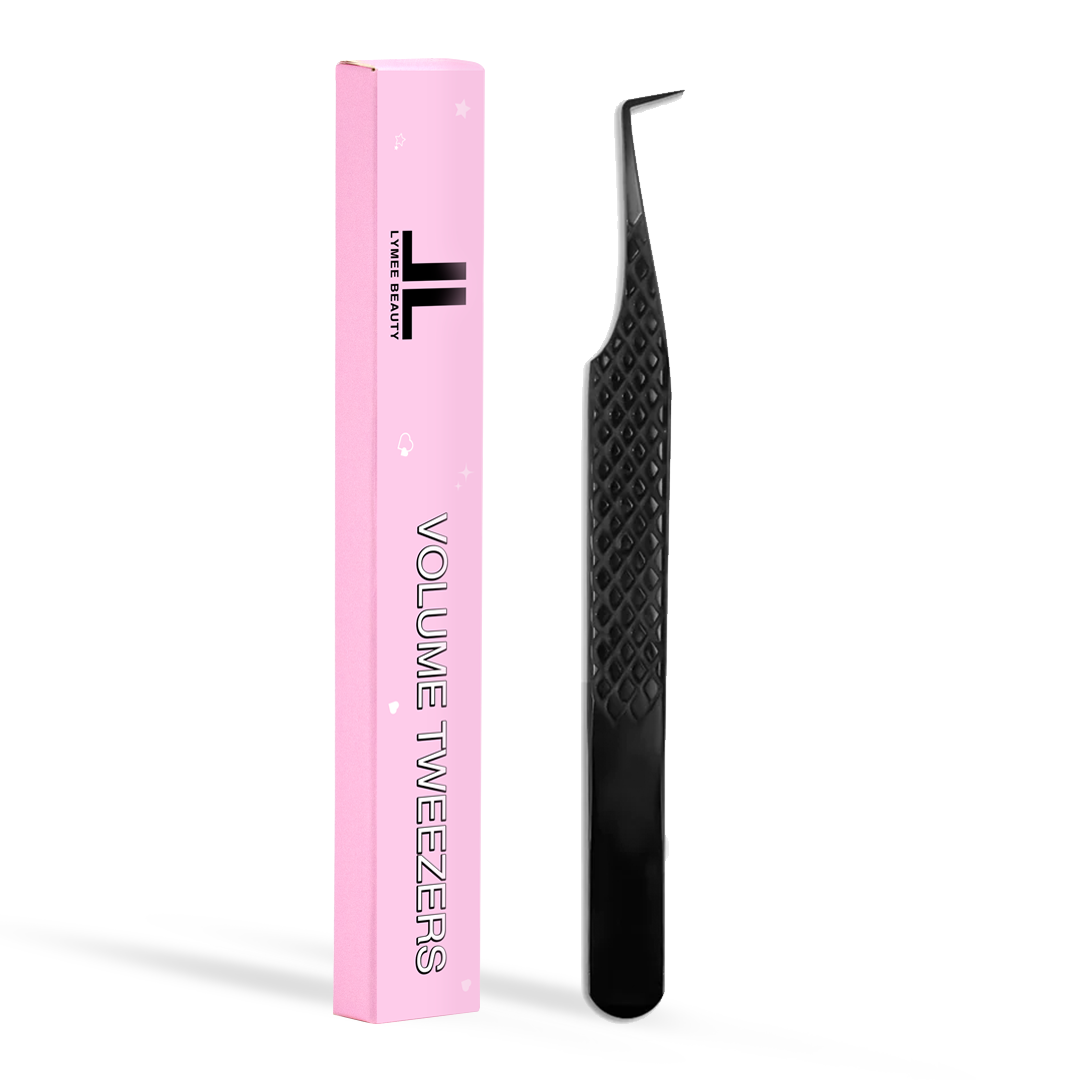


LymeeBeauty Professional Eyelash Extension Tweezers
The right lash tweezers should match your technique, hand position and preferred pickup pressure. A well-suited pair gives you greater control when isolating natural lashes, creating volume fans or placing extensions, while an unsuitable shape may lead to slipping, uneven fans and unnecessary hand tension.
LymeeBeauty offers professional stainless-steel lash tweezers in multiple shapes, tip designs and finishes. Explore Fiber Tweezers, Volume Tweezers, Multifunctional Tweezers, Isolation Tweezers and complete Tweezer Kits for classic, hybrid, volume, promade and mega-volume treatments.
Discover professional lash tweezers designed for precision, control, and comfortable everyday use. The LymeeBeauty Tweezers collection includes fiber-tip, volume, isolation, and multifunctional designs for different application techniques. Whether you are separating fine natural lashes, creating handmade fans, picking up promade fans, or applying classic extensions, find the tweezer shape that complements your working style.
Professional Precision: Fine, carefully aligned tips support accurate isolation, controlled pickup, and clean extension placement.
Options for Every Technique: Choose from straight, curved, angled, boot-shaped, fiber-tip, and multifunctional designs for different lash services.
Comfortable Artist Control: Lightweight and balanced constructions help reduce unnecessary hand pressure during detailed or extended appointments.
Isolation tweezers are used to separate one natural lash from the surrounding lashes before an extension is attached.
A precise isolation tweezer should open comfortably, provide a clear view of the lash line and allow the artist to maintain separation without applying excessive pressure.
Straight Isolation Tweezers
Straight tweezers offer a direct line of sight and are commonly used for classic application. Their fine tips are useful for separating natural lashes and reaching small gaps.
They are a practical choice for:
- Classic lash isolation
- Working through upper layers
- Inner-corner lashes
- Artists who prefer a direct hand position
- Detailed lash-line checks
Curved Isolation Tweezers
Curved tweezers follow the natural shape of the eyelid and may reduce the wrist angle required to reach layered or difficult lashes.
They are useful for:
- Dense natural lash lines
- Lower lash layers
- Inner- and outer-corner access
- Clients with prominent eyelids
- Artists who prefer side isolation
V-Groove Isolation Tweezers
Selected LymeeBeauty isolation tweezers, including the TF-18 design, feature a wider V-shaped opening and structured tips. This shape can improve visibility and help the artist separate, spread or hold lashes from different working angles.
The ideal isolation shape depends on your wrist position and the direction from which you normally approach the natural lash.
Fiber tweezers feature a textured gripping area designed to provide more consistent contact with lash fibers. The larger gripping surface can reduce slipping and make it easier to pick up handmade or ready-made fans.
LymeeBeauty Fiber Tweezers are available in black, light pink, violet and other finishes, with several angled and curved tip shapes.
Fiber tweezers are suitable for:
- Handmade volume fans
- Promade and premade fan pickup
- Narrow fan pickup
- Easy Fan lashes
- Mega-volume fibers
- Artists who struggle to find a small traditional sweet spot
A fiber grip can improve contact, but the artist must still use the correct pickup position and pressure. Excessive squeezing may damage the fan base or create unnecessary hand fatigue.
Volume tweezers are designed to pick up several fine lash fibers at once and maintain control while a fan is created.
90-Degree Tweezers
A 90-degree tip provides a broad working surface and a strong angle for fan creation. It is popular for volume and mega-volume techniques, especially when the artist picks up lashes from the side or works directly from the strip.
Recommended for:
- Volume and mega-volume fans
- Pinching techniques
- Promade fan pickup
- Wide fan control
- Artists who prefer a vertical hand position
Boot Tweezers
Boot tweezers have a longer contact area along the tip. This extended surface can provide a larger sweet spot and help hold multiple fibers evenly.
Recommended for:
- Beginner volume practice
- Wide handmade fans
- Higher-density fans
- Promade and loose fan pickup
- Artists who prefer a lower closing pressure
Curved Volume Tweezers
Curved volume tweezers combine an angled working tip with a more natural wrist position. They are versatile for fan creation, pickup and placement.
They can be used for:
- Classic and hybrid pickup
- Volume fan creation
- Narrow or promade fans
- Wispy spike making
- Direction correction
Multifunctional tweezers are designed for artists who prefer one tool that can complete several tasks. Depending on the tip shape, they may be used for isolation, classic pickup, fan pickup or extension placement.
They are particularly useful for:
- Mobile lash kits
- Backup tools
- Artists who frequently change techniques
- Hybrid sets
- Detail work and final checks
A multifunctional tweezer can perform several tasks, but it may not replace a specialised isolation or volume tweezer for every artist.
A tweezer kit provides several tip shapes for different stages of application.
LymeeBeauty professional kits include combinations such as:
- Isolation tweezer
- 90-degree tweezer
- Volume boot tweezer
- Curved tweezer
A complete kit is suitable for lash students, new salon setups and artists who want backup tools in several shapes. It also allows beginners to compare different angles before deciding which design best suits their hand.
Classic Lash Extensions
Use a straight or curved isolation tweezer in one hand and a fine-point placement tweezer in the other.
The pickup tweezer should grip one extension cleanly without bending it or requiring excessive pressure.
Hybrid Lash Extensions
Combine a precise isolation tweezer with a curved, boot or fiber-grip pickup tweezer. A multifunctional tweezer can also be useful when switching between classic lashes and volume fans.
Handmade Volume Fans
Choose a boot, 90-degree or fiber tweezer with a reliable sweet spot. The best shape depends on whether you use the lonely fan, pinching, rolling or another trained fanning technique.
Promade and Premade Fans
Fiber-grip, boot and curved tweezers are practical for picking up ready-made fans. The contact area should hold the base securely without closing or twisting the fan.
Mega-Volume Fans
Mega-volume techniques require a tweezer capable of holding multiple ultra-fine fibers evenly. Look for a broad, consistent sweet spot and a closing pressure that can be maintained without excessive hand tension.
Wispy and Anime Spikes
A fine curved or multifunctional tweezer can help pick up narrow sections and keep spike fibers together. The tips should provide enough control to lift the spike without separating its base.
The sweet spot is the area along the tweezer tips where both sides meet evenly and grip the lash fibers most securely.
Some traditional tweezers have a small sweet spot that requires very precise pickup. Boot and fiber-grip tweezers often provide a wider usable contact area.
To locate the sweet spot:
- Close the tweezer slowly without squeezing.
- Observe where the two tips meet first.
- Pick up a small section of lashes at different points along the tip.
- Identify the area that holds the fibers securely with the least pressure.
- Mark the preferred hand position mentally and practise using it consistently.
The sweet spot can feel different depending on the angle at which the tweezer is held.
Closing pressure describes how much force is required to bring the tweezer tips together.
A tweezer that is too stiff for your hand may cause finger, wrist or forearm fatigue. A tweezer that is too soft may feel unstable or close before you are ready.
Choose a pressure that allows you to:
- Hold isolation steadily
- Pick up fans without shaking
- Release extensions smoothly
- Maintain a relaxed hand
- Work without squeezing excessively
Hand comfort is personal. A tweezer that works perfectly for one artist may not suit another artist’s grip or finger placement.
Fine Point
Fine pointed tips provide visibility and precision for isolation, classic pickup and detailed placement.
Angled Tip
An angled tip offers improved contact when picking up several fibers from a lash strip.
Boot Tip
A boot tip provides an extended gripping surface and is commonly used for volume fan creation.
Curved Tip
A curved tip can follow the lash line and reduce the amount of wrist rotation required during application.
V-Shaped Tip
A V-shaped opening can improve visibility and help access lashes from several directions during isolation.
A lightweight tweezer may reduce hand fatigue, but overall balance is just as important as total weight.
The tweezer should feel stable between the fingers without pulling forward at the tip or backward toward the handle. Your fingers should be able to control it without constantly adjusting the grip.
When testing a tweezer, consider:
- Where your fingers naturally rest
- How far you hold it from the tip
- Whether the wrist remains neutral
- How much pressure is required
- Whether the tips shake when closed
Remove Adhesive Residue
Remove visible adhesive using a professional tweezer cleaner that is compatible with the metal and surface finish. Avoid scraping the tips aggressively, as this may alter their alignment or gripping surface.
Clean Before Disinfection
Disinfectant cannot work correctly through visible adhesive, dust or product residue. Clean the tweezers first according to your salon hygiene procedure.
Disinfect Correctly
Use an appropriate professional disinfectant and follow its dilution, contact-time and rinsing instructions. Requirements vary by location, so follow applicable salon regulations.
Do not leave coated tweezers soaking longer than recommended, as prolonged exposure may damage the finish.
Dry Completely
Dry the tweezers thoroughly before placing them inside a case or adding a tip protector. Trapped moisture may mark or damage the metal.
Protect the Tips
Store each clean tweezer inside a protective case, magnetic holder or individual compartment. Avoid allowing sharp tips to strike other tools.
Do Not Drop Them
Even a short fall can bend the tip or change its alignment. If a tweezer has been dropped, inspect its closure before using it near a client’s eye.
A beginner normally needs one isolation tweezer and one pickup tweezer. A straight or gently curved isolation tweezer combined with a boot or fiber-grip volume tweezer provides a practical starting setup.
A multi-piece kit is useful for testing several shapes before choosing a favourite.
Fiber tweezers have a textured gripping surface that creates multiple contact points along the tips. This can provide a more secure grip and a larger usable sweet spot than a completely smooth tweezer.
They are commonly used for handmade volume fans, promade fans and fine lash fibers.
Not automatically. Fiber tweezers offer stronger contact and may be easier for artists who experience slipping. Smooth tweezers may provide a cleaner release and greater precision for artists who already have a preferred sweet spot.
The better option depends on the technique and hand pressure.
Use a fine-point straight or curved tweezer for isolation and a precise pickup tweezer for the individual extension.
The tips should close evenly enough to hold one lash without bending or dropping it.
Boot, 90-degree, curved volume and fiber-grip tweezers are all popular options. Choose according to your fanning method and preferred hand angle.
A curved, boot or fiber-grip tweezer usually provides enough contact to hold the fan base securely. Grip near the base without pressing the upper fan.
Boot tweezers have a longer horizontal gripping surface, while 90-degree tweezers create a sharper working angle.
Boot tweezers are often selected for a wider sweet spot. A 90-degree shape may suit artists who prefer a more vertical pickup position.
Use a relaxed grip, keep the wrist neutral and avoid squeezing harder than necessary. Adjust the bed, chair and client position so that you do not need to reach or rotate your wrist throughout the treatment.
A lighter closing pressure may help, but technique and workstation posture are equally important.
Straight tweezers provide a direct line of sight. Curved tweezers may follow the eyelid more naturally and improve access to layered lashes.
Try both shapes while maintaining a neutral wrist position to determine which feels more comfortable.
Possible causes include:
- Adhesive residue on the tips
- Picking up outside the sweet spot
- Insufficient or excessive closing pressure
- Holding the tweezer at the wrong angle
- Bent or misaligned tips
- Gripping too high on the fan
- Using a tip shape unsuitable for the technique
Clean and inspect the tweezer before changing your pickup technique.
The fan may be gripped too high, squeezed too firmly or picked up with a contact area that is too narrow. Hold the fan closer to its base and use only enough pressure to keep the fibers together.
A multifunctional tweezer may perform several tasks, but most artists achieve better control with at least one dedicated isolation tweezer and one dedicated pickup or volume tweezer.
Many lash tweezers can be used with either hand, but the angle may feel different for left-handed artists. The most important factors are visibility, wrist position, tip direction and closing pressure.
Clean away visible residue first, then use a professional disinfectant according to its stated concentration and contact time. Follow local salon regulations and the care instructions for the tweezer’s material and coating.
Sterilisation requirements depend on local regulations and the treatment environment. Confirm that the tweezer material and coating are compatible with the selected process.
A box labelled as a UV storage or steriliser box should not automatically be treated as a complete validated sterilisation system.
Professional tweezers are reusable, but they must be cleaned and disinfected between clients. Keep used tools separate from cleaned and processed tools.
Store clean, dry tweezers in a closed case or holder with the tips protected. Do not allow tweezers to move freely inside a drawer or travel bag.
Stop using them and inspect the tips. If they no longer align, close evenly or grip correctly, replace them.
Trying to force bent tips back into position may create sharp, uneven edges and unreliable closure.
Filing can permanently change the sweet spot and tip alignment. Only perform maintenance with a tool specifically designed for the purpose and with a clear understanding of the risk.
Severely bent, twisted or damaged tweezers should be replaced.
There is no fixed replacement period. Lifespan depends on frequency of use, cleaning products, storage, coating care and whether the tweezers are dropped.
Replace a tweezer when the tips become damaged, misaligned or unable to maintain a reliable grip.
Lash tweezers have extremely sharp tips and are intended for trained professionals working around the eye area. Handle them carefully, keep them away from children and never leave them unprotected on the treatment bed.
Trusted Lash Supplies for Artists Who Work Every Day.


